Reduce business electricity costs
Every unit generated and used on site is a unit not bought at your commercial rate, which is where the bulk of the saving comes from.
For businesses
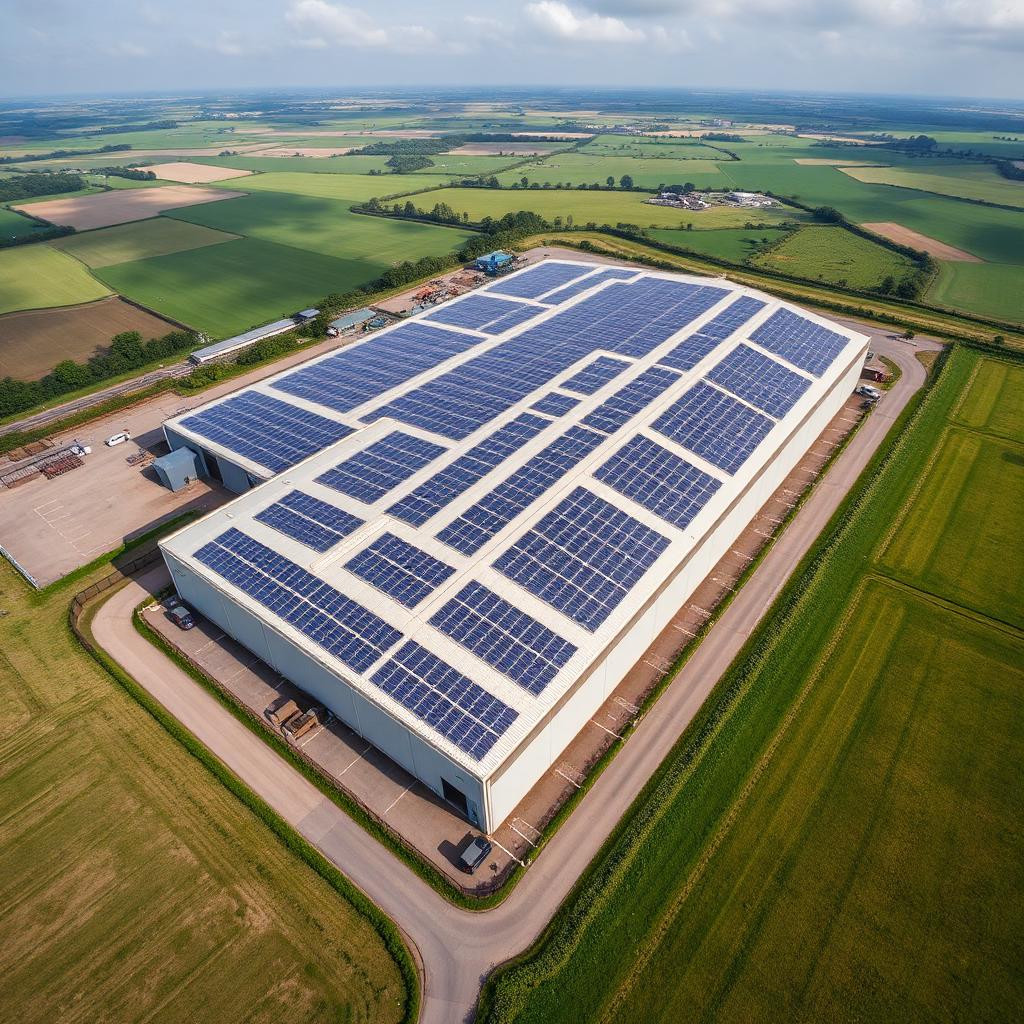
Commercial solar PV generates electricity on your own roof or land and feeds it straight into the building, so the site buys less from the grid during its working day. It is for businesses with a meaningful daytime electricity load: warehouses, offices, factories, farms and retail units. We start from your half hourly consumption data rather than the roof area, because the value of a commercial system comes from how much of the generation the site uses itself. From there we model the array, the expected generation and the payback, and set out the case in writing before any commitment.
Free, no obligation survey.
Step 1
We review your half hourly consumption data and bills, survey the roof or land, and check the structure, the incoming supply and the existing switchgear.
Step 2
We model the array, the expected generation, the share your site would use directly and the payback, then issue a written proposal and a firm price.
Step 3
Work is phased around your operating hours, with access, isolations and lifting agreed in advance so production and trading keep running.
Step 4
You get monitoring access, the commissioning and warranty documentation, and a maintenance route for the life of the system.
Every unit generated and used on site is a unit not bought at your commercial rate, which is where the bulk of the saving comes from.
A commercial battery holds generation the site cannot use immediately and releases it into the evening or the next morning shift.
For landlords, on site generation contributes to the EPC position alongside lighting, controls, heating and fabric improvements.
Installation is phased around operating hours, with roof access and electrical isolations planned so the business keeps trading.

For landlords
The Minimum Energy Efficiency Standards set a floor for the EPC rating a commercial property needs before it can be let or kept on an existing lease. Where a building sits below that floor, the practical route is a combination of fabric and building services improvements that move the rating, rather than one single measure.
On site generation reduces the assessed energy use of the building, which can contribute to the EPC rating alongside efficiency work.
Solar on its own rarely moves a poor rating far enough. Lighting, controls, heating plant and fabric usually have to be addressed with it.
We start from the current EPC and the assessor recommendations, then model which combination of measures reaches the required rating.
Large, uninterrupted roof spans and a steady daytime load from lighting, doors and handling equipment.
Weekday demand from lighting, IT and cooling that lines up closely with when solar generates.
High process loads through the working day, often the strongest case for generation on site.
Barn and shed roofs, plus land that is not in production, alongside refrigeration and milking loads.
Trading hours that match daylight, with refrigeration and lighting running throughout.
Every project is priced from the survey, so you get a written quote for your own property rather than a headline figure.
Funding changes what a project costs you. Check energy grants and funding.
We install commercial solar for businesses across Newcastle upon Tyne, Gateshead, Sunderland, South Shields, North Tyneside, Durham, Northumberland and Teesside. See every area we cover across the North East.
Tell us about the property and we will arrange a survey at a time that suits you.
Free, no obligation survey.
Last updated 21 September 2026.